
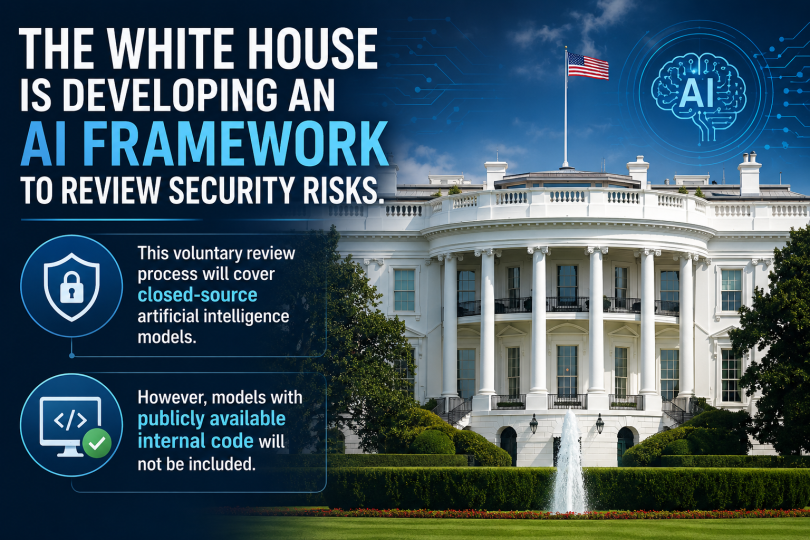

This voluntary review process will cover closed-source artificial intelligence models; however, models with publicly available internal code will not be included.
White House officials stated during a meeting with major artificial intelligence (AI) companies on Tuesday that the federal government plans to review only specific types of AI models—rather than all models—to assess potential security risks; this was reported by four individuals familiar with the discussions.
Three of the four sources noted that the models the government intends to review are known as “closed” models. The source code—or programming code—for these models is not made public, and they are developed by companies such as Anthropic and OpenAI.
However, the administration has stated it has no plans to review “open-source” AI models. For open-source models, the computer code is publicly available, allowing anyone to download and modify it. Nevertheless, this stance could change as the technology advances. US companies like Nvidia, Meta, and Google develop open-source models, as do Chinese firms such as Alibaba, DeepSeek, and Moonshot AI.
Representatives from Anthropic, OpenAI, Microsoft, Meta, Google, and Nvidia attended the meeting, according to two individuals who spoke on condition of anonymity because the details were confidential. Although the White House has sought input from these companies, according to a source, the work of formulating AI review rules is now in the final stage.
The administration’s moves are part of an effort to play a more active role in regulating AI and to institutionalize oversight of major AI labs like OpenAI and Anthropic. Yet, they are also delaying action on some of the most critical regulatory issues associated with the technology—such as the potential risks posed by increasingly powerful open-source models being developed by Chinese companies.
The decision to exclude open-source models from the review process could benefit companies attempting to narrow the gap with Anthropic and OpenAI, both of which are considered leaders in developing next-generation AI technology. Companies like Meta have utilized open-source software to create products that directly compete with those two major startups.
This framework, which emerged following months of secret discussions between administration officials and some of the world’s most influential tech companies, is expected to help shape the trajectory of the global AI race.
President Trump began his second term as a strong proponent of AI, emphasizing the necessity of supporting this technology to maintain an edge over China. He advocated for flexible policies rather than strict controls and cultivated close ties with major AI corporations and billionaire investors. However, his stance has shifted amidst growing concerns regarding rising electricity costs, job losses, and the risks posed by advanced AI-driven cyberattacks.